




Why It is Easier To Fail With What Is Rs485 Cable Than You Might Assum…
페이지 정보
작성자 Kara 댓글 0건 조회 7회 작성일 25-12-07 04:25필드값 출력
본문
Remember that the /SS is active low so to select a device you need to set the pin low; otherwise the pin should idle high. To ensure the appropriate device responds to a command, what is rs485 cable the signal includes an identification or address for the device to follow the command while others ignore it.Each device must have a unique address to avoid accidental command reactions. If you are running Serial2 at 4800 baud, the rest of your application must be able to function properly using the remaining portion of the CPU time. Any required SPI output signals must be configured as outputs, either by calling InitSPI() or by setting the appropriate bits in the Port D data direction register DDRD. Regardless of the network, however, there are only four signals used: SCK provides a synchronized clock, MOSI and MISO signals are used for data transmission and reception, and /SS configures the QScreen as a master or slave device. Note that the master device outputs the clock synchronization signal SCK to the slave’s SCK which is configured as an input.
When the /SS input goes low, the slave (or QScreen in this case) transfers data in response to the SCK clock input that is initiated by the master. The SCK (serial clock) pin is a configurable synchronous data clock output. By polling the Port A pin or by setting up an interrupt service routine, you can configure the QScreen to ignore the SCK input when /SS is high and keep MISO in a high-impedance state so that it does not interfere with the SPI bus. If you are using the QScreen as a slave device and require the /SS signal for your external SPI hardware, configure one of the Port A pins on the Field Header as an input pin. ♦ RS485 control output signals, convenient for controlling device near and in distance. The SPIE bit in the SPCR (SPI control register) enables SPI interrupt handling. The QED-Forth kernel includes pre-coded drivers that configure and control the SPI for maximum speed data transfers. The maximum sustainable baud rate on the secondary serial port is 4800 baud. The InitSPI() function provides a convenient way to initialize the SPI as the master at a 2MHz baud rate.
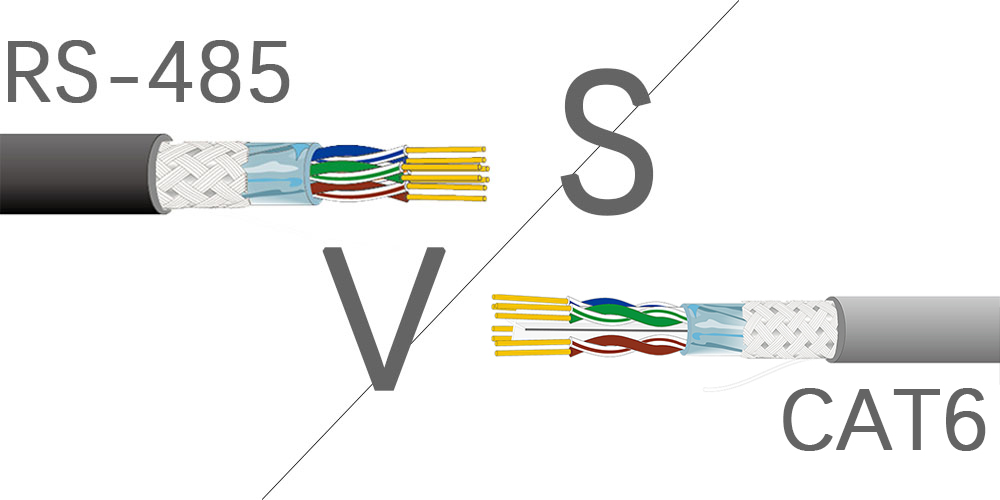
Ultimately, it can be thought of in a way that serial communication is more made for this usage as compared to the common USB and ethernet. If more than one slave tried to drive the transmit line simultaneously, their serial drivers would fight with each other for control of the bus. The SPI can transfer data much more rapidly than an asynchronous serial link - its maximum rate is 2 Megabits/second. The rate of data transmission is expressed in bits per second, or baud. For example, at 4800 baud (bits per second), each bit lasts about 200 microseconds (µs), and if communications are full duplex (e.g., if the QScreen Controller echoes each incoming character), then there is a serial interrupt every 100 µs or so. Thus, as a rough approximation, operating at 4800 baud full duplex requires about 40 to 50% of the 6811's CPU time (that is, an average of approximately 40 to 50 µs service time every 100 µs). Moreover, if Serial2 is running full duplex at 4800 baud, any other interrupt service routine that takes longer than 100 µs is likely to cause a problem. Although the maximum standard baud rate of the primary serial port is 19200 baud, nonstandard baud rates of over 80 Kbaud can be attained by the 68HC11's on-chip UART and the onboard RS232 driver.
You might also consider operating the secondary serial port at a lower baud rate to relax the timing constraints. To further reduce the effects of interference, a low Baud rate of 2400 (or 1200) Baud is used. The primary serial channel can operate at standard speeds up to 19200 baud and can be configured for either RS232 (the default) or RS485 operation. Most Modbus implementations use RS485 due to the allowance of longer distances, higher speeds and multiple devices on a single network. In these distributed processing networks, a variety of machines and instruments work locally, but communicate and share data or resources with one another globally using a single serial link. At any given time, only the master and a single "active" slave communicate. The master and slave could even exchange ascii QED-Forth commands. When the network master wants to talk to this particular slave, it outputs the slave’s ascii name onto the serial bus. Devices will be linked together via a bus configuration as shown in the picture above. A ground connection is also necessary to ensure that the communicating devices have a common voltage reference. The GROUND line serves as a common voltage reference for the master and slave.